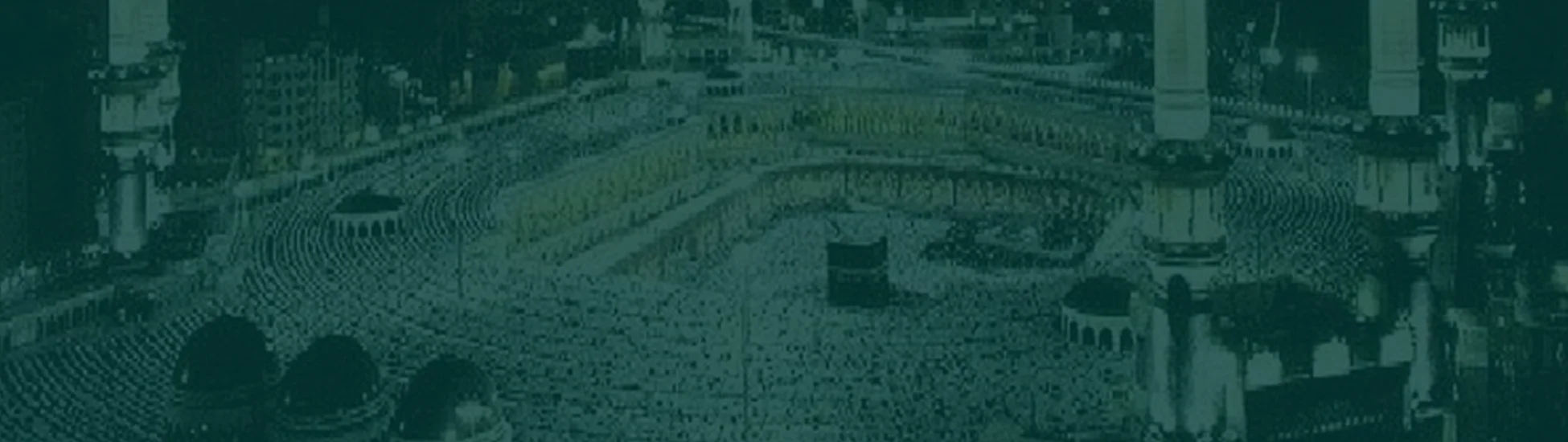

Comprehensive Hajj Guide: Your Path To The House Of Allah
Hajj is one of the five pillars of Islam, a sacred pilgrimage that every Muslim must perform once in their lifetime if they have the physical and financial means to do so. For most British Muslims it is the journey of a lifetime, and preparing for it properly makes all the difference. This guide walks you through every stage of the pilgrimage, from the significance of the Kaabah to the rites of Mina, Arafat and Muzdalifah, along with the most common mistakes pilgrims make and how to avoid them.
Many pilgrims choose to perform Umrah first as a way of becoming familiar with the holy cities before attempting the more demanding rites of Hajj. Our umrah packages with flights and visa included depart from London, Manchester and Birmingham throughout the year and give you the chance to complete tawaf and sa’i with an English speaking mutawwif before your Hajj year arrives.
Kaabah: The House of Allah (Baitullah)
The Kaabah, situated in the centre of Masjid al-Haram in Makkah, is the most sacred site in Islam. This cube shaped building, draped in the symbolic black Kiswah embroidered with golden Quranic verses, is the spiritual centre towards which more than 1.8 billion Muslims turn in prayer five times each day.
The Kaabah carries a deep history within Islam. It was built as the first house of worship dedicated to Allah by Prophet Ibrahim and his son Prophet Ismail, peace be upon them both, at Allah’s command. The Black Stone, known as al-Hajar al-Aswad and placed at the eastern corner of the Kaabah, is said to have been set there by Ibrahim himself.
The Kaabah has been rebuilt several times across the centuries, yet its spiritual significance has never changed. When you perform Hajj you become part of an unbroken chain of pilgrims stretching back through Islamic history, from every corner of the globe, including the Prophet Muhammad, peace be upon him, who performed his farewell pilgrimage in 632 CE.
Words rarely capture the feeling of standing before the Kaabah for the first time. Pilgrims often describe an overwhelming sense of closeness to Allah, and a powerful connection to Muslims of every language and background, as well as to the generations of believers who stood in that same place before them.
Meeqat: The Ihram Stations
When travelling to Makkah for Hajj, it is obligatory to enter the state of Ihram at a designated boundary point known as the Meeqat. These stations mark the limits beyond which no pilgrim intending Hajj or Umrah may pass without having assumed Ihram.
The Five Primary Meeqat Stations
Dhul Hulayfah, also called Abyar Ali, lies around 450 km from Makkah near Madinah. It is the Meeqat for pilgrims coming from or passing through Madinah, and it is the furthest station from Makkah.
Al-Juhfah is roughly 204 kilometres north west of Makkah, in present day Rabigh. This station serves pilgrims from Syria, Egypt, Morocco and other western regions, and is used by many pilgrims arriving via Jeddah.
Qarn al-Manazil (Al-Sayl) is around 94 km from Makkah in the direction of Najd. It serves pilgrims arriving from the east, including those from Riyadh and the Eastern Province.
Yalamlam is about 54 kilometres from Makkah in the direction of Yemen, and serves pilgrims arriving from Yemen and the southern provinces.
Dhat Irq is around 94 km from Makkah in the direction of Iraq, and serves pilgrims from Iraq and surrounding regions.
Pilgrims flying from the UK usually either enter Ihram before boarding, or assume it on board the aircraft before crossing the Meeqat boundary. Many scholars advise entering Ihram before you begin travelling, so there is no risk of crossing the Meeqat unintentionally without it.
If you travel to Madinah first, which many pilgrims prefer, you would enter Ihram at Dhul Hulayfah before heading to Makkah. The site has proper facilities for changing, performing wudu and preparing yourself spiritually for the journey ahead.
How to Assume Ihram
Entering the state of Ihram is the first rite of Hajj and involves both physical and spiritual preparation.
Begin with a full bath, known as ghusl, or perform wudu if a full bath is not possible. Trim your nails and remove unwanted hair before putting on the Ihram garments, as these actions are not permitted once you are in Ihram.
For men, the Ihram consists of two unstitched white sheets. The Izar is the lower garment, wrapped around the waist and covering from the navel to below the knees. The Rida is the upper sheet, draped over the shoulders. Men should not wear any stitched clothing while in Ihram, including underwear, headwear or stitched shoes. Footwear should not cover the ankles, so sandals are the usual choice.
Women wear ordinary modest clothing that covers the body in line with Islamic requirements. The clothing may be any colour, though many choose white or light shades. Women leave the face and hands uncovered, so no niqab or gloves, although they may drape a cloth loosely away from the face if privacy is needed in mixed crowds.
You may apply fragrance to your body before entering Ihram, but not to the Ihram garments themselves. Once you are in the state of Ihram, applying perfume is no longer permitted.
Where the time is not one in which prayer is discouraged, offer two raka’ahs before entering Ihram. Then make the intention for Hajj in your heart. Saying the intention aloud is not required, though many pilgrims do so.
Then recite the Talbiyah: “Labbayk Allahumma labbayk, labbayka laa shareeka laka labbayk, innal hamda wan ni’mata laka wal mulk, laa shareeka lak.” Men recite it aloud, women quietly. It means: Here I am, O Allah, here I am. Here I am, You have no partner, here I am. All praise, favour and dominion belong to You. You have no partner.
Continue reciting the Talbiyah throughout the days of Hajj, until you begin stoning Jamrat al-Aqabah on the Day of Nahr, the 10th of Dhul Hijjah.
Forms of Hajj
Hajj may be performed in one of three ways, each with its own requirements.
Hajj al-Tamattu
Hajj al-Tamattu is the form most commonly performed by international pilgrims. You perform Umrah first on arrival in Makkah during the Hajj months of Shawwal, Dhul Qidah or the early days of Dhul Hijjah. After completing the Umrah you exit the state of Ihram and resume normal life. You then re-enter Ihram from your accommodation in Makkah on the 8th of Dhul Hijjah for Hajj. This form requires an animal sacrifice, known as the Hady, usually a sheep or goat. For a full explanation of the Umrah rites, see our detailed Umrah Guide.
Hajj al-Qiran
Hajj al-Qiran combines Umrah and Hajj under a single Ihram. You enter Ihram intending both together and remain in that state until all the rites of Hajj are complete. This form also requires a sacrifice.
Hajj al-Ifrad
Hajj al-Ifrad is performing Hajj alone, without an accompanying Umrah. You enter Ihram with the intention of Hajj only. No sacrifice is required for this form, though making one voluntarily is still encouraged.
The Prophet Muhammad, peace be upon him, recommended Tamattu for those travelling from outside Makkah, which is why it remains the form most widely taught and practised by international pilgrims today.
The Hajj in Steps: Day by Day
Hajj takes place over several days in the month of Dhul Hijjah, with specific rites tied to each day.
Day 8 – Yawm al-Tarwiyah (Day of Reflection)
On the 8th of Dhul Hijjah, pilgrims performing Tamattu enter Ihram from their accommodation in Makkah. All pilgrims then travel to Mina, a tent city roughly 8 kilometres from Makkah. You spend the day and night there in prayer and reflection, offering Dhuhr, Asr, Maghrib and Isha on the 8th and Fajr on the 9th in Mina.
Day 9 – Yawm al-Arafat (Day of Arafat)
The 9th of Dhul Hijjah is the Day of Arafat, the central day of the entire pilgrimage. After Fajr in Mina, pilgrims travel to the plain of Arafat. The standing at Arafat, known as Wuquf, is the most important rite of Hajj. The Prophet, peace be upon him, said that Hajj is Arafat, which shows just how essential it is. Pilgrims spend the afternoon in worship, supplication and repentance. Dhuhr and Asr are combined and shortened at Arafat. After sunset, pilgrims depart for Muzdalifah without offering Maghrib there.
Night of Muzdalifah
At Muzdalifah, which lies between Arafat and Mina, pilgrims offer Maghrib and Isha combined. You rest under the open sky, gather pebbles for the stoning rite and take what sleep you can before the following day.
Day 10 – Yawm al-Nahr (Day of Sacrifice)
Pilgrims leave Muzdalifah for Mina on the 10th of Dhul Hijjah, known as Yawm al-Nahr. This is the busiest day of the pilgrimage. You begin by stoning the largest pillar, Jamrat al-Aqabah, with seven pebbles. The sacrifice is then offered where required. After this, men shave their heads or trim their hair, and women trim a fingertip length from their hair. You then perform Tawaf al-Ifadah, the principal Tawaf of Hajj, along with Sa’i between Safa and Marwah if you have not already completed it. Most restrictions of Ihram are lifted after the stoning and cutting of hair, with the exception of marital relations, which remain prohibited until Tawaf al-Ifadah is complete.
Days 11, 12 and 13 – Ayyam al-Tashriq
The 11th, 12th and 13th of Dhul Hijjah are the days of Tashriq, spent in Mina. Each day after the sun has passed its zenith, you stone all three Jamarat pillars in order, small, medium and large, with seven pebbles each. Pilgrims may leave Mina after stoning on the 12th, or remain for the 13th for additional reward.
Tawaf al-Wada (Farewell Tawaf)
Before leaving Makkah, pilgrims perform the Farewell Tawaf. This is the final rite of Hajj and the last act of worship at the Kaabah before departing the sacred city.
Obligatory Duties of Hajj
Hajj has core pillars, known as Arkan, without which the pilgrimage is not valid, and secondary obligations, known as Wajibat, whose omission requires a compensatory sacrifice.
The Four Pillars of Hajj (Arkan)
- Ihram: Entering the state of consecration with the intention for Hajj
- Standing at Arafat on the 9th of Dhul Hijjah
- Tawaf al-Ifadah: The main circumambulation of the Kaabah
- Sa’i between Safa and Marwah: Walking between the two hills
Hajj is not valid if any of these pillars is omitted.
Obligatory Acts (Wajibat)
- Assuming Ihram at the Meeqat
- Staying at Muzdalifah
- Spending the nights in Mina during the days of Tashriq
- Stoning the Jamarat on the days of Tashriq
- Halq or taqsir, shaving or trimming the hair
- Tawaf al-Wada before leaving Makkah
Omitting any of these requires a compensatory sacrifice.
Tawaf and Its Rules
Tawaf, circling the Kaabah seven times, is central to Hajj. There are several types: Tawaf al-Qudum, performed on arrival in Makkah; Tawaf al-Ifadah, the obligatory Tawaf of Hajj; Tawaf al-Wada, the farewell Tawaf; and voluntary Tawaf, which may be performed at any time.
How to Perform Tawaf Correctly
You should be in a state of wudu before beginning Tawaf. Start at the Black Stone, facing it and saying “Bismillah, Allahu Akbar”. If you are able, kiss the Black Stone, or touch it and kiss your hand, or simply point towards it from a distance if the crowds make contact impossible.
Keep the Kaabah on your left and walk anticlockwise. Men may perform Idtiba during Tawaf al-Qudum, passing the upper sheet under the right arm and over the left shoulder. Raml, walking briskly, is performed during the first three circuits of Tawaf al-Qudum only.
Between the Yemeni Corner and the Black Stone, recite: “Rabbana atina fid-dunya hasanah, wa fil-akhirati hasanah, wa qina adhab an-nar.” Outside this section you are free to make any supplication you wish.
Complete seven full circuits. Afterwards, offer two raka’ahs behind Maqam Ibrahim if possible, or anywhere in the Haram if it is too crowded. Then drink Zamzam water and make du’a.
Essential Supplications for Hajj
Certain supplications are closely tied to the rites of Hajj. The Talbiyah is the pilgrim’s constant companion, recited from entering Ihram until the stoning on the 10th. The afternoon of Arafat is the most significant time for supplication, and the Prophet, peace be upon him, described the du’a of the Day of Arafat as the best supplication.
Common supplications during Hajj include asking for forgiveness, for good in this world and the next, for mercy, and for family, friends and the wider Muslim community. You may also supplicate in your own language, as sincerity of the heart matters more than the form of words.
Mistakes to Avoid During Hajj
These are among the most common errors that can affect the validity or the experience of your Hajj:
- Crossing the Meeqat without having entered Ihram
- Breaking the restrictions of Ihram, such as applying perfume, cutting hair or nails, or marital relations
- Missing the standing at Arafat, without which Hajj is not valid
- Beginning or ending Tawaf at the wrong point, or completing fewer than seven circuits
- Pushing or harming others in order to reach the Black Stone, which carries no reward and causes real harm in dense crowds
- Rushing through the rites without presence of mind or understanding
- Spending more time shopping or sightseeing than in worship during the days of Hajj
- Treating other pilgrims differently based on nationality or social status, when all stand equal before Allah
Recommendations for Hajj Pilgrims
Physical Preparation
Start building your fitness several months before you travel. The rites involve a great deal of walking and standing, often in heat and crowds, so gradual conditioning makes a real difference.
Educational Preparation
Learn the rites thoroughly before you go. Understanding what you are doing and why is key to a spiritually meaningful pilgrimage. Attend pre-Hajj classes or seminars where they are available in your local area.
Packing Essentials
Travel light but prepared. Bring comfortable walking sandals, unscented toiletries, any regular medication, copies of your key documents and a small backpack for daily essentials.
Health and Hydration
Keep well hydrated throughout, particularly on the Day of Arafat and during the days in Mina. Heat related illness is common among pilgrims and is largely preventable with adequate fluid intake and shade. Check the current Saudi vaccination requirements and any NHS travel health advice well before departure.
Group Coordination and Safety
Stay with your group and follow your group leader’s instructions. Move together in dense crowds to avoid becoming separated, and agree a meeting point in advance. For more on staying safe during the pilgrimage, visit our Safety and Security page. Our Transportation Services cover transfers between Makkah, Mina, Arafat and Madinah throughout your journey.
Spiritual Conduct
Be patient and considerate with other pilgrims. Hajj is physically demanding for everyone around you, and patience and good character are themselves acts of worship.
Make du’a often, especially at Arafat, during Tawaf and during Sa’i. These are moments in which supplications are particularly hoped to be accepted.
Visit to Madinah
Many pilgrims travel to Madinah after Hajj to pray in Masjid al-Nabawi and send salutations upon the Prophet, peace be upon him. This visit is not part of Hajj itself, but it is a valued part of the wider journey for most pilgrims.
Life After Hajj
Let the experience change you. Return home with renewed faith and a firmer commitment to living as Allah has instructed. A Hajj Mabrur is one whose effect lasts for the rest of your life.
Conclusion
Hajj is a journey that renews faith, devotion and sacrifice. Learn the rites, prepare properly and approach each act with sincerity, and you give yourself the best chance of a pilgrimage that is accepted and that stays with you for good.
At Aqdas Travel we support British pilgrims through every stage of the journey, with experienced guides who handle the logistics so you can focus on worship. Explore our 21 Days Non-Shifting Hajj Package for a full pilgrimage itinerary. May Allah accept your Hajj and reward you abundantly.