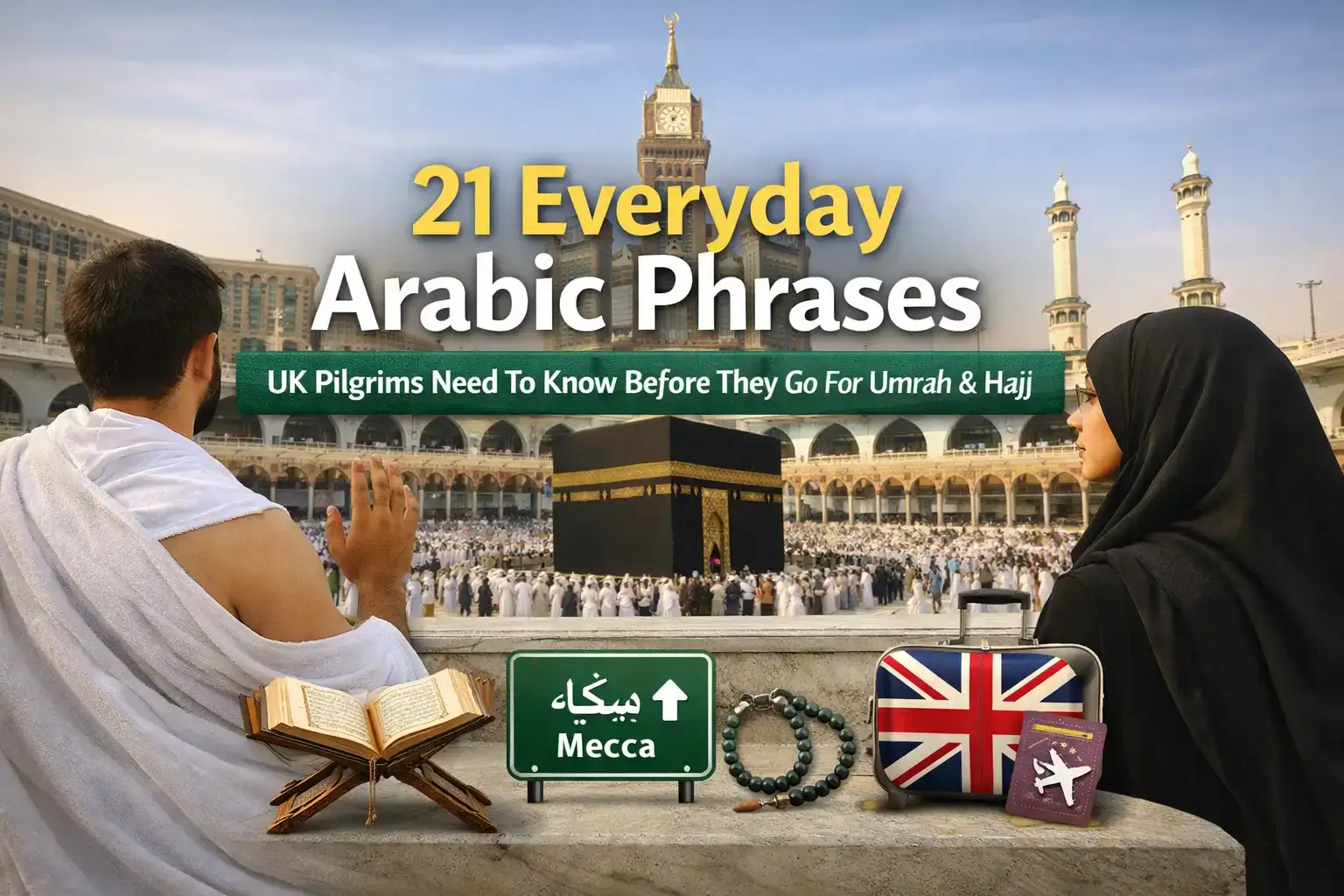
And you will discover that being able to speak basic Arabic phrases makes your pilgrimage experience miraculously different. Whether you’re traveling with an umrah travel agency or booking as part of independent hajj packages, strong local interaction makes for a better trip. Pilgrims from Britain, linguistically prepared, experience Saudi Arabia with less distress and find it easier to be spiritually aware.
Useful Greetings and Courtesies
Daily Greetings That You Can Reach for All the Time
You should memorize “Assalamu alaikum” (peace be upon you), the standard Islamic greeting you’ll hear everywhere. Muslims reply with “Wa alaikum assalam” (and upon you be peace), and you will repeat these words hundreds of times each day. You will find that you gain access and develop a relationship with local Saudi people when you use a respectful acknowledgment.
You also have to memorise “Sabah al-khair” (good morning) and “Masaa al-khair” (good evening) for the daytime. These are the kinds of respect or cultural shows locals really appreciate.
Expressing Gratitude and Politeness
It’s impossible to oversell how much “Shukran” and “Shukran jiddan” (thank you very much) matter during your time there. It can come in handy when asking for help at hotels and restaurants, where you will say “Min fadlak” (please, masculine) or “Min fadlik” (please, feminine).
You should also not forget “Afwan” (you’re welcome) when someone does a favour for you. These niceties make your communications much more bearable.
Pilgrimage-Specific Terminology
Sacred Ritual Phrases
You’ll notice and hear “Labbayk Allahumma labbayk” (here I am, O Allah, here I am) over and over again as you move through the Haram. This talbiyah line is a pledge of your soul, and you should know what it means before reaching there.
You need to get familiar with “Tawaf” (circumambulating the Kaaba) and “Sa’ee” (walking between Safa and Marwa). You’ll see these concepts repeatedly during your rituals, and knowing what they mean can enrich your spiritual practice.
You will also need to know the words “Ihram” (sacred state) and “Haram” (the sacred enclosure), as these are used often by guides and local people. These are things your umrah travel agency normally elaborates on, but it still pays to know them yourself.
Hajj-Specific Phrases for Pilgrims
You will be doing yourself a service if you get to know “Arafat” (the plain where pilgrims stand), “Muzdalifah” (the gathering point), and “Mina” (the tent city). Most hajj packages come with guides, but a basic knowledge of these sites spares you from getting lost.
You should be aware of “Ramy al-Jimaar” (stoning of the pillars) and “Qurbani” (sacrifice), as they are included in hajj rituals. You’ll never fully appreciate your experience if you don’t understand what is happening all around you.
Practical Daily Communication Phrases
Hotel and Accommodation Requests
You’ll need “Yoojad ghurfa?” (is there a room available?) when seeking accommodation. You could say “Aureed ghurfa wahida” (I want a single room) or “Ghurfa lithnayn” (a room for two people) clearly.
You have to know “Haqibati” (my luggage) if you need help with your bags. You’ll also use “Miftah” (key) a lot, so that’s one word you’re not going to forget.
Restaurant and Food-Related Terms
For very basic beverage requests, you would want to know “Aureed al-maa” (I want water) and “Aureed qahwa” (I want coffee). The word “Halal” (permissible) is very important when eating out to ensure your food follows Islamic teachings.
If you’re vegetarian, you may say “La akul laham” (I don’t eat meat). You can also ask “Mumkin shay?” when enquiring about tea, and “Mumkin biddoon malah?” (can you leave out the salt?) for dietary preferences. These little sentences eliminate confusion during meals.
Directional and Navigation Phrases
Finding Your Way Around
You’ll need “Ayn al-masjid?” (where is the mosque?) frequently during your pilgrimage. You should also say “Ayn al-mataaf?” (where is the circumambulation area?) when navigating the Haram.
You need to know “Yameen” (right), “Yasaar” (left), and “Amam” (straight ahead) when someone is giving you directions. You can respond with “Afham” (I understand) or “La afham” (I don’t understand) so guides, locals, and your umrah travel agency can communicate better with you.
Emergency and Assistance Phrases
At crucial times, “Aureed musa‘ada” (I need help) should never be ignored. If you have health problems, memorise “Aureed tabib” (I need a doctor). You’ll also want to have your hotel’s Arabic name and address printed so you can show it to taxi drivers.
Shopping and Transaction Phrases
Haggling and Purchasing
You’ll encounter “Bi kaam?” (how much?) constantly in markets and shops. Reply with “Ghali jiddan” (too expensive) if haggling over price, or “Mumkin akher se‘ar?” (any chance of a better price?) to show you understand local practice.
You must learn “Akher?” (final?) once you come to an agreement. Saying “Tayyib” (okay) confirms the purchase.
Religious and Respectful Expressions
Phrases Expressing Spiritual Intention
It helps to preface future plans with “In sha’ Allah” (God willing). When expressing gratitude for a blessing, use “Alhamdulillah” (all praise is due to Allah).
You also need to know “Subhanallah” (glorified is Allah) and “Mashallah” (as Allah has willed), phrases you’ll hear locals use repeatedly. These expressions reflect Islamic awareness and cultural literacy.
Final Language Preparation Recommendations
Offline Arabic translator apps are worth downloading before you board. Whether you’re travelling with established hajj packages or arranging your own journey through an umrah travel agency, linguistic preparation is crucial.
People are genuinely grateful when you try to speak Arabic, even imperfectly. Making the effort shows respect for Saudi culture and Islamic traditions. It helps create a pilgrimage enriched with meaningful connections and confidence in holy places.