I have helped over 300 British families take their elderly parents for Umrah in the past seven years. The most common question I hear is this: “My mum is 75 and uses a walking stick. Can she really do Umrah?”
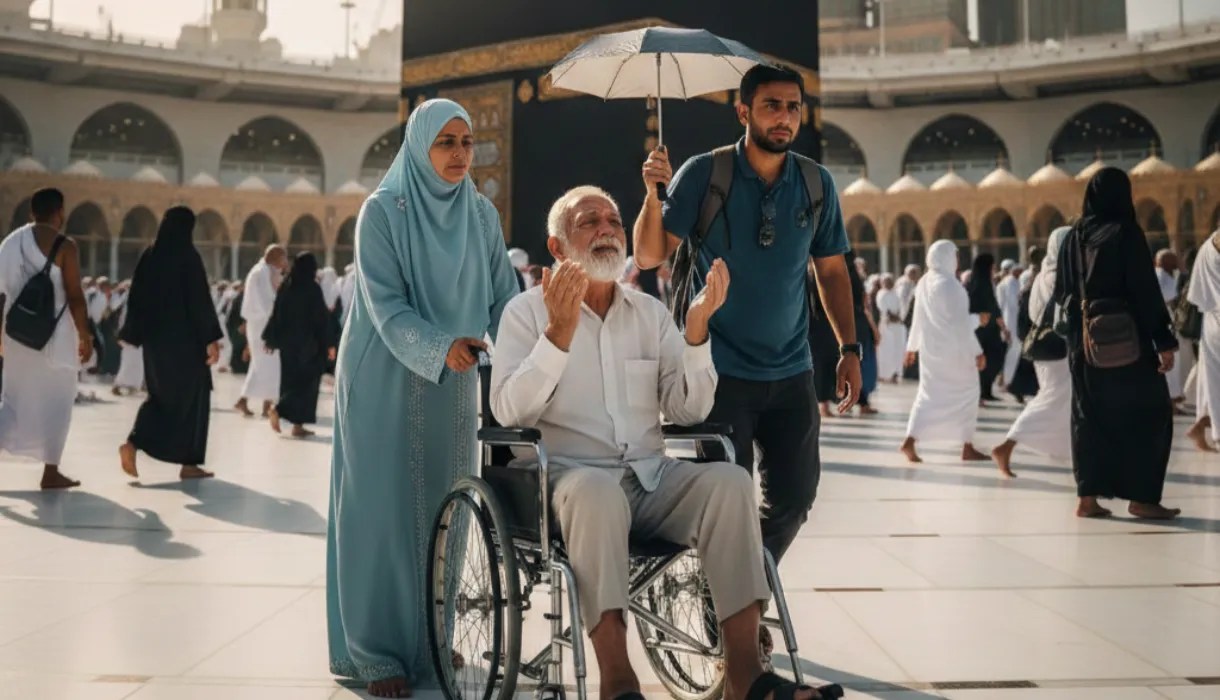
The answer is yes, absolutely. Last month, I accompanied a family from Bradford whose 82-year-old father completed his entire Umrah in a wheelchair. He cried with joy throughout Tawaf. His daughter told me later it was the most meaningful experience of their lives.
Umrah with elderly parents from the UK requires planning, patience and understanding of what facilities actually exist in Makkah and Madinah. This guide gives you everything you need to know.
Understanding What Elderly Parents Actually Need
Your elderly parents are not asking for luxury. They need comfort, accessibility and dignity during their spiritual journey. The physical demands of Umrah are real. Walking long distances, standing for prayers, navigating crowds and dealing with heat all challenge older bodies.
But Saudi Arabia has made massive improvements for elderly and disabled pilgrims. The Haram now has over 10,000 wheelchairs available. Dedicated wheelchair paths exist for Tawaf and Sa’i. Hotels near the mosque offer lifts, ramps and accessible rooms. The infrastructure supports elderly worship better than ever before.
Your job is knowing what exists, how to access it and planning your trip around your parents’ specific needs.
Medical Planning: The Foundation of Everything
Start with a complete health check three months before travel. Your parents need to see their GP or consultant to discuss the journey. This is not optional. The doctor assesses whether they are fit enough for the trip and what special care they might need.
Specific health concerns to discuss include heart conditions, diabetes, joint problems, breathing difficulties and blood pressure issues. Some elderly people need medication adjustments before travelling. Others might need extra support like walking aids or portable oxygen.
Get written prescriptions for all medications. Bring double the amount you think you will need. Pack medicines in original packaging with prescription labels clearly visible. Keep a copy of all medical records, including recent test results, current conditions and emergency contact information for their UK doctors.
Create a medical information sheet listing all health conditions, medications with dosages, allergies and emergency contacts. Keep this in English and Arabic if possible. Many UK travel agencies can help arrange translation services.
British pensioners often take regular medications at specific times. Plan how you will manage this with the time difference. Saudi Arabia is three hours ahead of the UK. Work out new medication schedules before you travel so you are not figuring this out while jet-lagged.
Choosing the Right Time: When Elderly Parents Travel Best
The best months for Umrah with elderly parents are November through February. Temperatures range from 18-25°C, which is comfortable for older people who tire easily in the heat. The weather makes walking, resting and performing rituals much easier.
December is particularly popular with British families because UK school holidays allow the whole family travel together. However, December packages cost more due to high demand. If your parents are flexible and you are not tied to school terms, January or February offers better value with similar pleasant weather.
Avoid the summer months of June through August unless absolutely necessary. Temperatures reach 40-45°C, which is dangerous for elderly people. Even with air conditioning, the heat between locations is exhausting. I have seen older pilgrims become ill from heat exhaustion despite taking precautions.
Ramadan carries special spiritual significance but brings extreme crowds. Millions of pilgrims fill Makkah during this blessed month. For elderly parents who struggle with mobility or get overwhelmed by crowds, this can be very stressful. If your parents specifically want Ramadan Umrah, book well in advance and prepare for challenging conditions.
April, May, September and October offer middle-ground options. The weather is warmer than winter, but crowds are smaller than in peak seasons. Prices are moderate. These months work well if your parents handle heat reasonably well, but you want to avoid extreme conditions.
Wheelchair Services: What Actually Exists
Free wheelchairs are available at both Jeddah and Madinah airports. Your UK travel agent should notify airport authorities about your needs before you travel. This ensures wheelchairs are ready when you land.
Inside the Haram, wheelchair services work on a first-come basis during busy times. However, you can rent wheelchairs for your entire stay. Manual wheelchairs are the cheapest. Electric wheelchairs and scooters cost around 200 Saudi Riyals per day (approximately £40). Having your own rented wheelchair gives you freedom and removes stress about finding one each time.
Wheelchair helpers dressed in green uniforms work throughout the Haram. They assist with pushing wheelchairs during Tawaf and Sa’i. This service is particularly valuable at Safa and Marwah hills, where the walking is longest. Tips are appreciated but not required.
Dedicated wheelchair routes exist for both Tawaf and Sa’i. These paths have smooth marble flooring specifically maintained for wheelchairs. The routes are clearly marke,d and helpers guide you. Performing Tawaf in a wheelchair is standard practice and completely accepted.
You can bring your own foldable wheelchair from the UK as checked luggage. This guarantees your parent has familiar equipment. Airlines usually allow medical equipment as additional baggage without extra charges, but confirm this when booking flights.
Some British families rent electric scooter,s which give elderly parents more independence. These work well for parents who can sit upright and steer but cannot walk long distances. Rental shops near the Haram offer various mobility aids.
Selecting Accommodation: Distance Makes All the Difference
Book hotels as close to Masjid al-Haram as possible. The difference between a 5-minute walk and a 20-minute walk is enormous for elderly parents. Every extra metre matters when your parent struggles with mobility.
Hotels within 300-500 metres of the Haram are ideal. Your parents can rest in their room and return for prayers without exhausting themselves. They can go back to the hotel between rituals to rest properly.
When booking through UK Umrah operators, specifically request ground-floor rooms or rooms close to lifts. Confirm the hotel has working lifts. Some older buildings claim to have lifts that frequently break down. Ask about backup stairs and whether your parents could manage them if needed.
Essential hotel features for elderly parents include bathroom grab rails, walk-in showers rather than baths, firm mattresses for back support, air conditioning that actually works and quiet rooms away from street noise. Request rooms facing away from construction sites which can be noisy.
Madinah accommodation should similarly be close to Masjid an-Nabawi. The walking distance matters just as much. Your parents will want to pray in the Prophet’s Mosque regularly. Making this easy protects their energy for worship.
The Journey from the UK: Airport to Haram
Request special assistance when booking flights from London, Manchester or Birmingham. Airlines provide wheelchair assistance from check-in through to your gate. Elderly passengers often get priority boarding, which avoids standing in long queues.
Book aisle seats or seats near the front of the plane. This makes bathroom access easier and reduces walking distance when boarding and leaving. Some airlines offer extra legroom seats for elderly passengers at no additional cost. Always ask.
Bring all medications in carry-on luggage. Never pack essential medicines in checked bags. Bring snacks that your parents enjoy, especially if they have specific dietary needs. Aeroplane food might not suit them.
The flight from the UK to Saudi Arabia takes about 6-7 hours. This is long for elderly people who struggle to sit still. Encourage your parents to walk up and down the aisle occasionally to prevent blood clots. Compression socks help with circulation.
Landing in Jeddah, the wheelchair assistance continues through immigration and baggage collection. The process takes 2-3 hours during busy times. Have patience. Keep your parents comfortable with water, snacks and reassurance.
The bus journey from Jeddah to Makkah takes 60-90 minutes. Some packages include private car transfers, which are more comfortable for elderly parents. The extra cost is worth it if your parents struggle with bus seating or need bathroom stops.
Physical Demands: Managing Energy and Rest
Elderly parents need more rest than younger pilgrims. Accept this from the start. Plan for frequent breaks between activities. Do not try to rush through rituals because everyone else is moving faster.
Tawaf involves walking around the Kaaba seven times. In a wheelchair, this takes 45-60 minutes. Walking takes longer. Your parents will tire. Allow them to rest afterwards before continuing to Sa’i.
Sa’i means walking between the Safa and Marwah hills seven times. The distance is 450 metres each way. That totals over 3 kilometres. For elderly people, this is exhausting. Wheelchair users do this comfortably. Walkers need multiple rest stops.
Perform rituals during cooler parts of the day. Early morning after Fajr prayer is ideal. The temperature is lower and crowds are smaller. Late evening, after Isha, also works well. Avoid midday heat when your parents tire fastest.
Schedule rest days into your trip. Do not plan activities every single day. Your parents need time to recover from jet lag, adjust to the climate and rest their bodies. A week-long trip should include at least two days with no scheduled activities beyond prayers.
Packing Essentials: What Elderly Parents Actually Need
Medications come first. Pack everything in a clearly labelled bag with prescriptions attached. Include basic medical supplies like bandages, pain relief, indigestion tablets and any regular treatments your parents use.
Comfortable walking shoes matter more than you think. British pensioners often bring new shoes for this special trip. Do not do this. New shoes cause blisters. Pack well-worn, supportive shoes your parents already know are comfortable.
Lightweight clothing works best in Saudi weather. Cotton fabrics breathe better than synthetic materials. Women need loose, full-coverage clothing and headscarves. Men need simple, comfortable clothes and their Ihram garments.
Bring a small folding umbrella for sun protection between buildings. A refillable water bottle keeps your parents hydrated. Pack a small bag for carrying essentials like money, phone and medications during the day.
Personal comfort items help elderly parents feel secure. This might include their favourite pillow, specific toiletries they prefer or snacks from home. These small things reduce stress in an unfamiliar environment.
Travel documents need a waterproof folder. This includes passports, booking confirmations, hotel addresses, emergency contact numbers and medical information. Keep photocopies separate from originals.
Supporting Your Parents During Rituals
Your role is helper, not director. Elderly parents need support but also deserve dignity and independence. Find the balance between helping and taking over.
During Ihram, your father might need help wrapping the two white sheets correctly. Practice this at home before travelling. YouTube videos show the technique. Your mother’s normal modest clothing works as Ihram. Make sure it is comfortable.
For Tawaf, stay close to your parents. Walk at their pace. If they are in a wheelchair, you or a hired helper push steadily and carefully. Remind them to make their own duas and prayers. This is their worship, not yours.
Sa’i between Safa and Marwah requires patience. Men are supposed to walk quickly between the green lights. Elderly fathers in wheelchairs are exempt from this. Push them at a comfortable, steady pace. Your mother can walk slowly without rushing.
After completing rituals, men shave their heads or trim their hair. Elderly fathers often prefer trimming to shaving. Barber shops near the Haram charge 10-20 Riyals (£2-4). Women cut a small amount of hair, about one fingertip length. Help your mother with this if she cannot manage it herself.
Emotional Considerations: The Unseen Challenges
Many elderly British Muslims waited decades for this journey. Your parents might feel overwhelming emotion when they first see the Kaaba. They might cry, shake or become speechless. This is normal and beautiful. Give them time to process their feelings.
Some elderly parents worry they are burdening their children. They feel guilty about needing help or slowing everyone down. Reassure them constantly. Tell them serving them during Umrah is your honour and brings you closer to Allah.
Crowds can overwhelm older people who are used to quiet lives. The constant movement of millions of pilgrims, the noise and the unfamiliar sights might stress your parents. Create calm spaces for them. Return to your hotel room regularly. Find quiet corners in the Haram for rest.
Your parents might compare their experience to others. They see younger, fitter pilgrims doing more and feel inadequate. Remind them that Allah accepts worship based on intention and ability, not speed or quantity. Their slower, careful Umrah is just as valuable.
Cost Planning for Elderly Umrah from the UK
Elderly Umrah packages cost more than standard packages because of location and assistance needs. Hotels very close to the Haram charge premium prices. Wheelchair services, special assistance and ground-floor rooms add costs.
Budget £1,200-£2,000 per person for a 7-10 day package including flights, accommodation, transport and support services. This covers comfortable hotels within walking distance of the Haram, with proper assistance and necessary facilities.
December and Ramadan packages cost significantly more, sometimes £1,500-£2,500 per person. Off-peak months like January, February, April or May offer better value while still providing suitable weather for elderly parents.
Additional costs include daily wheelchair rental if needed (£40 per day for electric), medications and supplements, special dietary foods if your parents have restrictions, comfortable shoes and clothing, and money for barbers, tips and small purchases.
Manchester departures sometimes offer competitive pricing compared to London. Check multiple UK operators for the best combination of price and services suited to elderly needs.
Healthcare Access in Makkah and Madinah
Medical clinics operate inside both the Haram in Makkah and Masjid an-Nabawi in Madinah. These provide emergency care free of charge for pilgrims. Trained medical staff speak multiple languages, including English.
Hospitals near the Haram offer full medical services. Your hotel reception can call for emergency assistance. Many hotels have doctors on call for guests. Ask about this when booking.
Pharmacies are plentiful near the Haram. Many medications available by prescription in the UK can be bought over the counter in Saudi Arabia. However, bring all necessary medicines from home. Do not rely on finding them there.
Keep emergency contact numbers saved in your phone. This includes UK emergency services, your hotel reception, your travel operator in the UK and local Saudi emergency numbers. Program these before you leave home.
Travel insurance that covers elderly parents is essential. Standard policies often have age limits. Buy specialist insurance that covers pre-existing conditions and medical evacuation if necessary. Read the policy carefully.
Making It Manageable: Your Action Plan
Start planning four months before travel. This gives time for medical checks, booking suitable accommodation and making all necessary arrangements without rushing.
Choose your package carefully. Work with experienced UK operators who understand elderly needs. Explain your parents’ specific requirements clearly. Good operators will suggest suitable options.
Book wheelchair assistance through your airline at least two weeks before travel. Confirm this several times. Check again 48 hours before departure.
Create a daily schedule that includes plenty of rest. Do not pack every day with activities. Your parents need downtime to rest, recover and simply exist in these blessed places.
Research the facilities at your specific hotel. Look for recent reviews from other families who travelled with elderly parents. Their experiences reveal what really works.
Prepare your parents emotionally. Show them videos of the Haram so they know what to expect. Discuss the crowds, the walking and the facilities. Managing expectations prevents anxiety.
Pack medical documents and prescriptions in both carry-on and checked luggage. If one bag is lost, you still have copies. Better to duplicate than regret.
Test all mobility equipment before travel. Make sure wheelchairs fold correctly, walking sticks are sturdy, and any other aids work properly. Replace batteries in any electric devices.
The Rewards of Taking Your Parents
Islamic tradition teaches that serving parents is among the most beloved acts to Allah. Taking your elderly parents for Umrah combines this service with worship. Your reward is immense.
The practical challenges are real. Yes, it requires more planning than travelling alone. Yes, it costs more money. Yes, you will move more slowly and rest more often. But watching your parents fulfil their lifelong dream is priceless.
Many British Muslims tell me that taking their elderly parents for Umrah was the most meaningful thing they ever done together. The shared experience created memories that outlasted everything else. When their parents eventually passed away, they had no regrets.
Your parents raised you, sacrificed for you and supported you throughout your life. This is your chance to give back in the most meaningful way possible. Make it happen while you still can.
Practical Tips from Years of Experience
Arrive in Makkah in the evening if possible. This lets your parents rest overnight before facing the Haram the next day. Immediate exposure after a long journey is overwhelming.
The first visit to the Haram should be for Tawaf only. Complete this ritual while the energy is fresh. Return to the hotel to rest before attempting Sa’i. Spreading rituals across time reduces exhaustion.
Keep a bag packed with emergency supplies. Include water, snacks, medications, phone charger, hotel key card and a small amount of cash. Take this everywhere.
Photograph important locations. Take pictures of your hotel from different angles so it is easier to find. Photograph the gate number you use to enter the Haram. These references help when everyone is tired and confused.
Buy extra SIM cards with data before leaving the UK or immediately upon arrival. Keep your parents’ phones working so they can contact you if separated.
Use the Nusuk app to book Rawdah entry in Madinah. Timed slots prevent overcrowding and make the experience calmer for elderly parents who struggle with pushing crowds.
Write down common Arabic phrases for your parents. “Wheelchair please”, “toilet”, “water” and “help” in Arabic help them communicate basic needs.
Bring UK power adapters. Saudi sockets are different. Your parents need to charge phones, medical devices and other electronics.
When Professional Help Makes Sense
Some elderly parents need more support than family can provide. Professional Umrah guides trained in elderly care help with everything from rituals to medical needs to emotional support.
These services cost extra but bring peace of mind. The guide handles logistics while you focus on worship and bonding with your parents. For families with very elderly or frail parents, this investment is worthwhile.
Check if your package includes guide services. Some operators provide guides as standard. Others charge separately. Compare what is included before booking.
Your Parents Cannot Wait Forever
Here is the truth many people avoid: elderly parents will not get healthier or younger. If you wait for perfect circumstances, you might wait until it is too late.
I have met too many British Muslims who delayed taking their parents, waiting for better finances or more convenient timing. Then their parents became too ill to travel. The opportunity passed forever.
If your parents can travel now, even with wheelchairs and medical needs, make it happen. The facilities exist. The support is available. The planning is manageable.
Book the trip. Make the arrangements. Take your parents while you still can. Future you will be grateful you did not wait.