
Comprehensive Hajj Guide: Your Path To The House Of Allah
One of the five pillars of Islam, Hajj is a spiritual pilgrimage for every Muslim who can afford it and has the physical and financial means to do so. But we’ve got you covered! This guide will help you through all abrah (wrong) to right without having any confusion, whether is something bad or mutilating your Hajj, it’s time for an end. This guide will take through each step that needs to be taken starting from the Significance of Kaabah till how Al-Afghani chickens can ruin your Hajj and some of the most common mistakes people make while performing it.
Kaabah: The House of Allah (Baitullah)
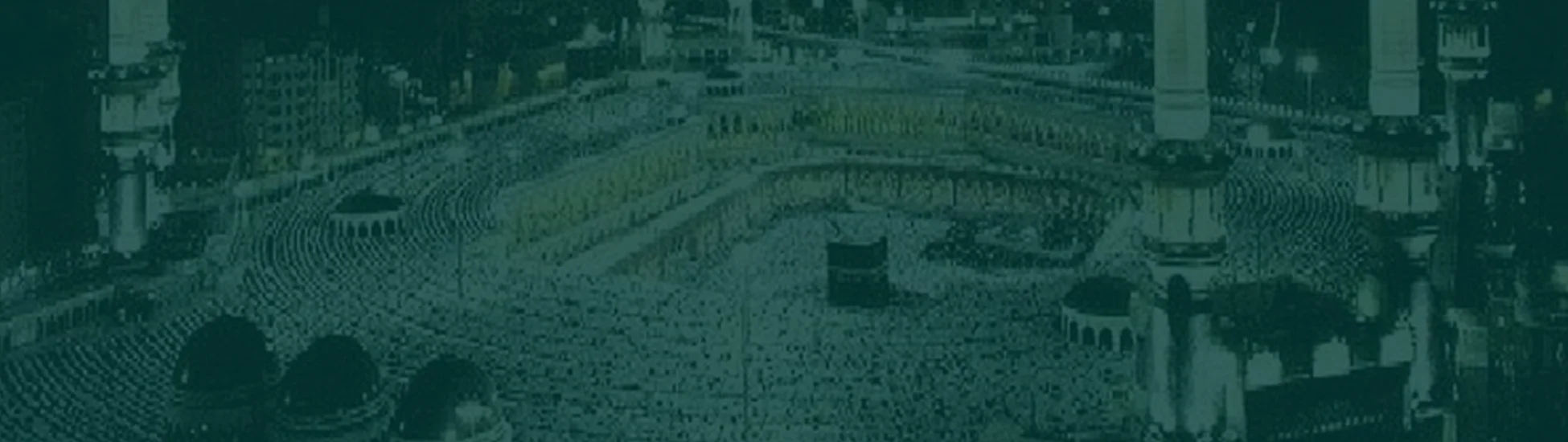
The Kaabah, situated in the centre of Masjid al-Haram in Makkah is the most holy site in Islam. This cube-like building covered with the symbolic black Kiswah, embroidered with golden Quranic verses, is the spiritual fulcrum to which more than 1.8 billion Muslims turn in prayer five times each day.
The Kaabah has a very rich history in Islam. The Kaabah was built as the first house of worship established for the worship of God by Prophet Ibrahim and his son Prophet Ismail (peace be on them both) at Allah’s commandment. The Black Stone (al-Hajar al-Aswad) placed on the eastern corner of the Kaabah is said to have been set there by Ibrahim.
The Kaabah has been reconstructed several times in the course of history; however, its spiritual significance remains unchanged over thousands of years. When you do Hajj, you feel at one with the millions of other pilgrims who have come here throughout Islamic history, from every corner of the globe — including the Prophet Muhammad (peace be upon him), who made his farewell pilgrimage to Mecca in 632 A.D.
Words cannot express how the feeling is like when you first stand in front of the Kaabah. Many pilgrims report feeling profoundly connected to Allah, to Muslims of all stripes and languages around the world, as well as to their ancestors in faith across the sweep of centuries.
Meeqat: The Ihram Stations
On reaching Makkah for Hajj, it is obligatory to enter into Ihram at the specified entry point which is called as Meeqat. These miqats have been set up as the stations from where every one must be in ihram if they intend to do Hajj or Umrah.
The Primary Meeqat Stations Are Five:
Dhul Hulayfah, also called Abyar Ali, is 450 km from Makkah near Madinah. This is the Meeqat for people who come from or pass through Madinah but it is the furthest one from Makkah.
Al-Juhfah is about 204 kilometers to the northwest of Makkah, in present-day Rabigh. This station is for the service of Pilgrims from Syria, Egypt, Morocco and other western regions. It is used by most pilgrims coming into Jeddah.
Al-Sayl (Qarn al-Manazil) is around 94 km from Makkah in the direction of Najd. It serves the pilgrims from the east such as those arriving from Riyadh and the Eastern Province.
Yalamlam is located about 54 kilometres from Makkah in the direction of Yemen and caters for pilgrims arriving from that country and the southern provinces.
Dhat Irq is 60 km away from Makkah in the direction of Iraq and caters to pilgrims from Iraq and surrounding areas.
For pilgrims flying out from the UK it is usual to be in Ihram before flight, or set the state up on board aircraft and cross the Meeqat boundary. Many scholars advise going into Ihram before you begin travelling, that way you can’t slip through the Meeqat unintentionally un-in Ihram.
If you went to Madinah first, and I strongly suggest this, enter Ihram from Dhul-Hulayfah and then head for Makkah to perform Hajj. Dhul Hulayfah, the beautiful Ihram station, has fantastic accommodations to change, perform wudu, and to spiritually prepare for your journey.
How to Assume Ihram
The state of Ihram is the first rite of Hajj and requires certain physical and spiritual preparation.
Firstly, take a full bath (ghusl) in the manner of wudu. This bath is spiritual purification as you cleanse yourself to become sanctified. Men mustn’t wear Ihram clothes before clipping their nails and plucking their hair.
The minimum covering for males is to cover the body from the navel to the knee. The Izar is the lower wear which covers from navel down to over the knees. The top piece of clothing, which is known as Rida, lies over the shoulder and wraps around the body. Men should not be wearing any sewn clothing, including underwear or hats etc. while in Ihram. Shoes must not extend above the ankle, so sandals are best.
Females wear any modest attire that covers their body from Islamic shop. The clothes may be any color, but many prefer white or light colors. Women also have to keep their faces and palms of hands free – no niqab, no gloves – although they may use something to hold slightly a little away from their face for some privacy.
You may wear and apply scent to your body (not Ihram) before putting on Ihram. When you are in state of Ihram, then fragrance becomes forbidden.
Perform two raka’ahs of Tahiyyatul Masjid, if you are not at a time when it is forbidden to offer Salah (i.e. between Fajr and sunrise till the sun passes its zenith; after Asr), plus two more raka’ahs for Ihram. Then, in your heart, make intention of Hajj. You do not have to announce your desire, but many do.
Then recite the Talbiyah “Labbaik Allaahumma labbaik, labbaika laa shareeka laka labbaik, innal hamda wan ni’mata laka wal mulk laa shareeka lak,” aloud for the men and quietly for women. Talbiyah is the prayer of the pilgrim: Here I am O Allah, here I am. Here I am: You have no partner, here I am. All praises, favours and powers are Yours. You have no partner.
Keep saying the Talbiyah all the time during Hajj, until you start throwing Jamrat Al-Aqabah on the Day of Nahr (sacrifice), i.e., 10th Dhul-Hijjah.
Forms of Hajj
Hajj can be performed in one of three ways, each with a unique set of features and requirements.
Hajj al-Tamattu
Hajj al-Tamattu is the most frequently practiced method by international pilgrims. Here you perform Umrah first on arrival in Makkah during the Hajj months of Shawwal, Dhul Qidah, or the first days of Dhul Hijjah. Once the Umrah is performed, you get out of the state of Ihram and you can live a normal life. From Makkah’s house, go back into Ihram on the 8th of Dhu al-Hijjah, for Hajj. For this, one has to slaughter an animal called Hady, normally a sheep or goat. For a comprehensive understanding of Umrah rituals, refer to our detailed Umrah Guide.
Hajj al-Qiran
Hajj al-Qiran: here Umrah and Hajj are performed together, with a single Ihram. You enter the state of Ihram intending for both Umrah and Hajj together and do not come out from Ihram until you complete all the rituals of Hajj. This form also includes making an offering.
Hajj al-Ifrad
Meanwhile, Hajj al-Ifrad is performing the Hajj only without Umrah. You make Ihram for Hajj only, no Umrah is done. There is no sacrifice for this form, but it’s still suggested.
The Prophet Muhammad, peace be upon him, suggested Tamattu for those coming from outside Makkah; this is the most popular form of ihram taught and practiced by international pilgrims today.
The Hajj in Steps: Day by Day
The Hajj consists of several days’ succession of specific rituals, carried out in the month Dhul Hijjah according to Islamic calendar.
Day 8 – Yawm al-Tarwiyah (Day of Reflection)
On the 8th day of Dhul Hijjah, Yawm al-Tarwiyah, pilgrims executing Tamattu enter Ihram from their domicile in Makkah. From there, all pilgrims proceed to Mina. Boarding the Bus – Travel – Pilgrimage: All of the pilgrims are now headed to Mina which is a tent city at around 8 kilometers from Mecca. You spend a day and night in Mina, praying and reflecting. The five daily prayers of Dhuhr on the 8th until Fajr on the 9th are prayed in Mina.
Day 9 – Yawm al-Arafat (Day of Arafat)
The 9th day of Dhul Hijjah is the day of Arafat, which if you have successfully performed, it means that most of your Hajj has been completed. Pilgrims leave Mina for the plain of Arafat in the forenoon after offering Fajr prayer there. The stay at Arafat, called Wuquf, is the most important of all Hajj rites. The Prophet, peace be upon him, also said: Arafat is Hajj; this highlights its incredible significance. Pilgrims perform rigorous acts of worship, prayer, and repent at Arafat throughout the afternoon. This is the most intense spiritual experience which a human can go through in their life. You would keep Dhuhr and Asr together at Arafat. Then after the setting of the sun, you go to Muzdalifah without offering Maghrib.
Night of Muzdalifah
At Muzdalifah, between Arafat and Mina, pilgrims perform the Maghrib and Isha prayers shortened and combined. You sleep under an open sky, gather pebbles for the stoning ritual and rest a little before the big day.
Day 10 – Yawm al-Nahr (Day of Sacrifice)
Pilgrims leave Muzdalifah for Mina before Fajr on the 10th of Dhul Hijjah, which is known as Yawm al-Nahr or the Day of Sacrifice. It is a day with many significant forms of worship. You begin by stoning the largest pillar, Jamarat al-Aqabah, seven times. Then you sacrifice if you need to. In the following stage, men shave their head or cut down their hair to a big extent and women cut at least one finger length of their hair. Once you do that, you are to make Tawaf al-Ifadah, the primary Tawaf of Hajj, and Sai between Safa and Marwah if you have not already done so previously. Most of the restrictions in Ihram are lifted upon pelting and shaving heads, except sexual relations that is not allowed until Tawaf al-Ifadah.
Days 11, 12, and 13 – Ayyam al-Tashriq (Days of Tashriq)
The 11th, 12th and 13th of Dhul Hijjah are days of Tashriq for those who remain available in Mina. You stone all three Jamarat pillars — small, medium and large — seven times each in succession every day after the sun passes its zenith point at midday. You can leave Mina after 12th stoning, for those who want or on the 13th for even more reward.
Tawaf al-Wada (Farewell Tawaf)
When you are about to leave Makkah, then you should say good-bye at one of the corners of the Holy Haram. This is the last rite of Hajj and the last thing you will do in worship at al-Kaabah before leaving Makkah, a city of Allah’s sanctuary.
Obligatory Duties of Hajj
Hajj has core fundamentals, known as Arkan or Rukn, without which Hajj is invalidated, and their neglection renders you subject to penalty through sacrifice — and subsidiary actions called Wajibat (the 14 of them) for carrying out the hajj.
The Four Pillars of Hajj (Arkan)
Hajj consists of four pillars including:
- Ihram: Entering the state of consecration
- Standing at Arafat on the 9th day of Dhul-Hijjah
- Tawaf al-Ifadah: The main circumambulation of the Kaabah
- Sai between Safa and Marwah: Walking between the two hills
The Hajj is invalid without any of these pillars.
Obligatory Acts (Wajibat)
Obligatory acts are:
- Assuming Ihram from the Meeqat
- Spending the night at Muzdalifah
- Staying in Mina for two nights (11th and 12th)
- Stoning all three Jamarat on the days of Tashriq
- Halq or taqsir (shaving or trimming hair)
- Tawaf al-Wada before leaving Mecca
Failure to suit these requires a sacrifice as reparation.
Tawaf and Its Rules
Tawaf (circumambulating of the Kaabah, 7 times) is integral to Hajj. There are various kinds of Tawaf: lesser (Tawaf al-Qudum), that is performed upon arrival to Mecca, obligatory (wajib) Tawaf, when one must perform seven circuits in the day and evening upon initial entry to the mosque at which an Umrah or Hajj is being put into place (Tawaf al-Ifadah), and voluntary tawaf, which can be performed at any other time.
How to Perform Tawaf Correctly
To do proper Tawaf you will need to have wudhu, be pure. Start at the Black Stone, raising your right hand and do Bismillah, Allahu Akbar. If you can, kiss the Black Stone, or touch it with your hand and then kiss that hand, or at least point to it from a distance.
Stay to the left of the Kaabah and continue walking counter-clockwise. How Men Can do Idtiba: Pass the top sheet under their right arm and over left shoulder. Raml which means to walk quickly would be performed during first three rounds of Tawaf al-Qudum only.
Between Yemeni corner and Black Stone read: Our Lord! Give us good in this world and good in the Hereafter, and defend us from the torment of the Fire! Otherwise, you may make any Duaa of your choice during the entire Tawaf.
Complete seven full circuits. Upon completion, perform two raka’ahs behind Maqam Ibrahim if this is not possible then in any part of the Haram. First, drink Zamzam water and pray.
Essential Supplications for Hajj
There are special prayers that can be recited during Hajj. The pilgrim’s constant companion is the Talbiyah which he recites from assuming Ihram, until stoning on the 10th. Remain at Arafat in prayer until after midday when supplications are answered. The best supplication is that said on the day of Arafah by the Prophet, peace be upon him.
Some common du’a during Hajj are for forgiveness, and to be blessed in this world and the next, for mercy, even prayers on behalf of family, friends and all Muslims. Thirdly, pray with your own language because the heart is more important in prayer than form.
Mistakes to Avoid During Hajj
The most recurrent errors which can spoil your experience of Hajj:
- Do not cross the Meeqat without assuming Ihram
- Do not commit sins of the Ihram, such as adorning yourself, cutting and shaving, sex between husband and wife
- Don’t fail to stand at Arafat, for without it Hajj is no longer Hajj
- Issues can arise, for example, when a person fails to begin or finish from the specified location of Tawaf (circumambulation) or does not perform seven circuits
- Pushing or hurting others to kiss the Black Stone is a sin. Keep your cool amid crowds and heat
- Try not to rush through a morning or nighttime ritual in a mindless state
- Rather than clocking round the shops or hitting all the sights when I should be worshipping
- Ensis all the pilgrims – whatever their nationality or social status is, all of them are equal before Allah
Recommendations to Hajj-Goers
Physical Preparation
Prepare physically the best you can with regular exercise months before Hajj. The rites consist of a lot of walking, standing and physical activity. Build your stamina gradually.
Educational Preparation
Do the rituals really well prior to going. Knowing what you are doing and why is key to ascending on a spiritual level. Attend any pre-Hajj preparatory classes or lectures, if offered.
Packing Essentials
Travel light but prepared: wear comfortable walking shoes, bring unscented toiletries, medications and backup copies of key documents along with a small backpack for essentials.
Health and Hydration
Keep yourself properly hydrated throughout, especially on the Day of Arafat and while in Mina. Heat illness like this is so common and easily preventable with enough to drink.
Group Coordination and Safety
Obey your clique leader and stay in contact with other members of the clique. Stand together when moving in large crowds to avoid getting separated. For comprehensive information on ensuring a secure pilgrimage, visit our Safety and Security page. Our reliable Transportation Services ensure smooth and comfortable travel throughout your journey.
Spiritual Conduct
Be patient and kind with other pilgrims. Keep in mind that Hajj is not easy for anyone. Worshipping is also to be patient and have a good morality.
Pray excessively particularly at Arafat, in circumambulating the Kaabah, during Tawaf and Sai. These are blessed moments when Duas find acceptance.
Visit to Madinah
Go to Madinah after Hajj, pray in the Masjid al Nabawi and send blessings to the Prophet (peace be on him). Though it is not part of Hajj, many pilgrims go to Madinah as the final step in their spiritual journey.
Life After Hajj
Finally, let Hajj transform you. Go home a better one, more faithful and convinced to live the way Allah told us. Hajj Mabrur is the Hajj, which continues to have effect for one’s entire life.
Conclusion
Hajj is a spiritual adventure which revives faith, devotion, and sacrifice. If you know the rituals, prepare well. Approach each act with sincerity and devotion. You can complete a Hajj that Allah accepts and change your life forever.
At Aqdas Travel, we make sure that your Hajj is a pleasant event by providing full help and support to accomplish it successfully with the assistance of experienced and skilled travel guides who take care of all your needs. Explore our 21 Days Non-Shifting Hajj Package for a comprehensive and comfortable pilgrimage experience. May Allah accept your Hajj and reward you bountifully.