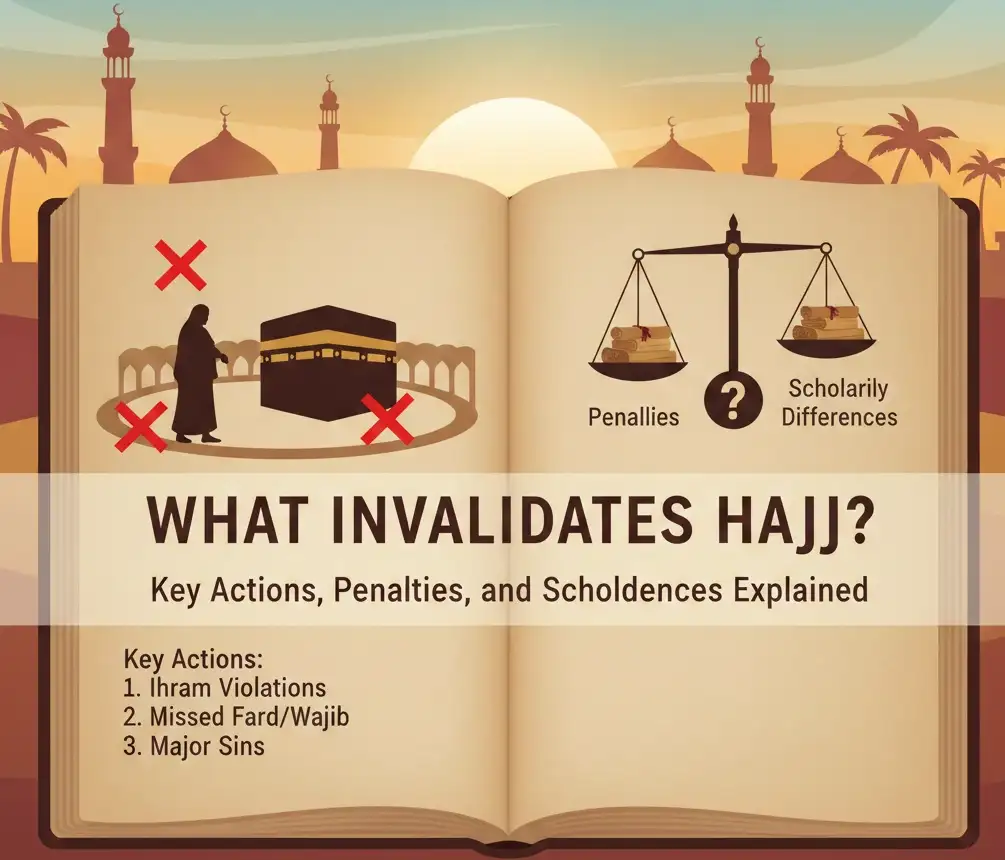
Performing Hajj is one of the most sacred acts in Islam, and every pilgrim wants to complete it correctly. Understanding what can invalidate your Hajj helps you avoid critical mistakes that could render your pilgrimage incomplete.
This comprehensive guide explains the actions that nullify Hajj, the penalties involved, and the differences of opinion among Islamic scholars.
Understanding Hajj Invalidation vs. Violations
What Does Invalidation Mean?
Invalidation means your Hajj becomes null and void, requiring you to repeat it entirely. This is different from violations that require penalties but don’t cancel your Hajj.
The distinction is crucial for pilgrims to understand before embarking on their journey.
Actions That Require Penalties Only
Some prohibited actions during Ihram require compensation (fidyah or dam) but don’t invalidate your Hajj. These include wearing stitched clothing, using perfume, or cutting hair.
These violations are serious but correctible through proper expiation.
Major Actions That Invalidate Hajj
Sexual Intercourse Before Wuquf at Arafat
Sexual intercourse before standing at Arafat completely invalidates Hajj according to all four major schools of Islamic jurisprudence. This is the most serious violation.
If this occurs, you must complete the current Hajj rituals, offer a sacrificial animal, and perform Hajj again the following year.
This ruling is based on clear Quranic injunctions regarding the sanctity of Ihram.
Missing the Standing at Arafat
Standing at Arafat (Wuquf) on the 9th of Dhul Hijjah is the most essential pillar of Hajj. Missing this ritual entirely invalidates your Hajj.
The Prophet Muhammad (peace be upon him) said: “Hajj is Arafat.” This emphasizes its absolute importance.
You must be present at Arafat for at least a moment between noon on the 9th and dawn on the 10th of Dhul Hijjah.
Apostasy During Hajj
Leaving Islam during Hajj nullifies all worship, including the pilgrimage. This is based on the Quranic verse stating that apostasy voids one’s deeds.
Upon returning to Islam, a person must perform Hajj again if it was obligatory upon them.
Scholarly Differences on Partial Invalidation
Sexual Intercourse After Arafat but Before Tawaf al-Ifadah
Scholars differ on whether intercourse after Arafat but before Tawaf al-Ifadah invalidates Hajj completely or requires only a penalty.
Hanafi and Maliki Opinion:
The Hajj remains valid, but a sacrificial animal (badanah) must be offered as expiation.
Shafi’i and Hanbali Opinion:
Some scholars within these schools consider it invalidating, requiring Hajj to be repeated.
Most contemporary scholars follow the view that it requires expiation but doesn’t invalidate the Hajj entirely.
Intentionally Missing the Muzdalifah Stay
Spending time in Muzdalifah after sunset on the 10th of Dhul Hijjah is a wajib (obligatory act) according to most scholars.
Hanafi Position:
Missing it intentionally requires a sacrificial animal but doesn’t invalidate Hajj.
Hanbali Position:
It is a pillar (rukn) of Hajj, and missing it completely may invalidate the pilgrimage.
Most scholars agree that staying even briefly in Muzdalifah fulfills the requirement.
Actions During Ihram That Require Penalties
Violations Requiring Fidyah (Compensation)
Several prohibited actions require fidyah, which includes fasting three days, feeding six poor people, or sacrificing a sheep:
-
Covering the head (for men)
-
Wearing stitched clothing (for men)
-
Using perfume or scented products
-
Cutting hair or nails
-
Engaging in disputes or arguments
These actions don’t invalidate Hajj but must be expiated according to Islamic law.
Violations Requiring Dam (Sacrificial Animal)
More serious violations require sacrificing a sheep or goat in the Haram area:
-
Intentionally missing the stay at Muzdalifah
-
Not performing Tawaf al-Wada (farewell Tawaf) before leaving Makkah
-
Delaying stoning rituals beyond the prescribed days
-
Entering Ihram from a point before the designated Miqat
The meat from these sacrifices must be distributed to the poor in Makkah.
Preventing Hajj Invalidation: Practical Tips
Proper Preparation and Knowledge
Before departing for Hajj, invest time in learning the rituals correctly. Attend classes, watch educational videos, and consult knowledgeable scholars.
Many pilgrims book their journey through reputable agencies like Aqdas Travel that provide comprehensive pre-departure guidance sessions.
Understanding what’s required versus what’s recommended helps you prioritize correctly.
Maintaining Ihram Restrictions
Create a checklist of Ihram prohibitions and keep it accessible during your journey. This simple step prevents accidental violations.
Remember that intentions matter greatly in Islam. Accidental violations have lesser penalties than intentional ones.
Time Management at Arafat
Arrive at Arafat well before noon on the 9th of Dhul Hijjah. Don’t leave before sunset to ensure you’ve fulfilled this essential pillar completely.
Use this sacred time for sincere worship, supplication, and seeking Allah’s forgiveness.
What to Do If You Commit an Invalidating Act
Immediate Steps to Take
If you commit an act that invalidates Hajj, don’t abandon the pilgrimage. Complete all remaining rituals as scheduled.
Consult qualified scholars immediately to understand your specific situation and the required expiation.
Offering the Required Sacrifice
Arrange for the sacrificial animal to be offered in Makkah. Many organizations facilitate this for pilgrims who’ve returned home.
Ensure the sacrifice meets Islamic requirements regarding the animal’s age, health, and condition.
Planning to Repeat Hajj
If invalidation occurred before Arafat, you must perform Hajj again as soon as practically possible. This becomes an immediate obligation.
Start planning financially and logistically for your makeup Hajj. Many pilgrims explore hajj packages for the following year to fulfill this obligation promptly.
Common Misconceptions About Hajj Invalidation
Myth: Any Mistake Invalidates Hajj
Many pilgrims become overly anxious, thinking minor mistakes nullify their entire pilgrimage. This isn’t true.
Islam is a religion of ease, and most mistakes during Hajj require penalties, not complete repetition.
Myth: Forgetting a Sunnah Invalidates Hajj
Forgetting recommended (Sunnah) actions doesn’t invalidate or even penalize your Hajj. Only missing obligatory elements carries consequences.
Focus on performing the pillars and obligatory acts correctly rather than stressing over every detail.
Myth: Accidental and Intentional Violations Are Equal
Islamic law distinguishes between intentional violations and those done out of forgetfulness or ignorance. Penalties differ accordingly.
Accidental violations typically require lesser expiation or may be forgiven entirely depending on circumstances.
Special Considerations for Different Circumstances
For Women During Menstruation
Women who begin menstruation during Hajj can perform all rituals except Tawaf. They should delay Tawaf until purification.
If departure is imminent and purification hasn’t occurred, specific rulings apply. Consult scholars for guidance in such situations.
For Those With Health Limitations
Pilgrims with genuine health issues that prevent certain rituals have concessions in Islamic law. Delegating certain acts may be permissible.
Document your health condition and consult scholars before Hajj to understand available accommodations.
For First-Time Pilgrims
First-time pilgrims should travel with experienced groups when possible. Learning from others’ experiences prevents many common mistakes.
Consider booking with established providers who offer educational support throughout the journey. Planning your pilgrimage with knowledgeable guides through umrah packages for practice can also help prepare you for Hajj.
The Role of Intention in Hajj Validity
Sincere Intention (Niyyah)
Your Hajj must begin with sincere intention to perform it solely for Allah’s pleasure. Without proper intention, rituals become mere physical acts.
Renew your intention throughout the pilgrimage, especially at major ritual points.
Maintaining Spiritual Focus
Avoiding invalidating actions isn’t just about following rules—it’s about maintaining the spiritual state of Ihram.
Keep your heart focused on worship, humility, and seeking closeness to Allah throughout your journey.
When Hajj Remains Valid Despite Mistakes
Missing Recommended Actions
Not performing recommended (mustahabb) acts like entering Ihram at the recommended Miqat when you entered it earlier doesn’t affect Hajj validity.
These actions earn extra rewards but aren’t required for completion.
Performing Actions in Different Orders
While the prescribed order is better, certain flexibility exists in the sequence of rituals on the Day of Sacrifice.
Stoning, sacrificing, and shaving can be done in any order according to authentic hadiths.
Conclusion: Protecting Your Hajj
Understanding what invalidates Hajj empowers you to perform this sacred pilgrimage correctly. Focus on the essential pillars—standing at Arafat, Tawaf al-Ifadah, and Sa’i.
Maintain the sanctity of Ihram by avoiding prohibited actions, especially those that nullify the pilgrimage entirely.
Prepare thoroughly, remain conscious of your spiritual state, and seek knowledge from qualified scholars. With proper understanding and sincere effort, you can complete a valid and accepted Hajj.
May Allah accept your pilgrimage and grant you a Hajj Mabrur.